






Everyone wants to be a leader. However, few are prepared to accept the accountability that goes with it. But you can't have one without the other. They are two sides of the same coin.
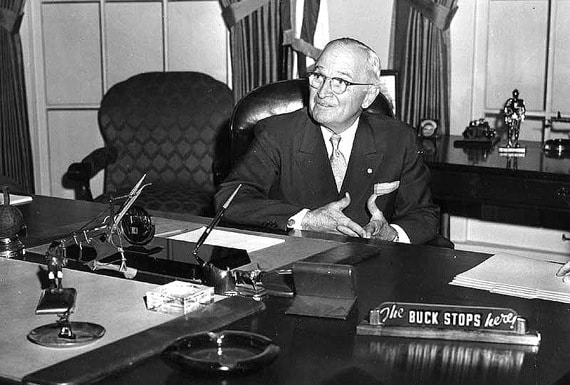
But what does accountability look like?
First and foremost, it means that you accept responsibility for the outcomes expected of you—both good and bad. You don't blame others. And you don't blame the external environment. There are always things you could have done—or still can do—to change the outcome.
Until you take responsibility, you are a victim. And being a victim is the exact opposite of being a leader.
Victims are passive. They are acted upon. Leaders are active. They take initiative to influence the outcome.
When I was the CEO of Thomas Nelson, we held a meeting once a month with our divisional leaders. We required each of them to write a report, detailing what happened the previous month.
They submitted their reports to my Executive Leadership Team. Then we meet with each leader face-to-face to discuss his or her operating results.
These reports provided a summary of what happened and a review of the key metrics that drove the business. We also asked each division head to describe how their leadership succeeded or failed.
We asked, “What was it about your leadership that produced these results?” The underlying assumption was that it is all about their leadership. We did not allow them to blame anyone internally or externally.
I remember one month when Allen Arnold did a particularly good job of this in his report. I have asked his permission to include it here, because I believe it serves as a great model for others.
By way of background, Allen leads the Thomas Nelson Fiction division. He started this division several years ago and has done a great job leading it to it's current level of success.
But even great leaders, like Allen, have bad months. But when they do, they take full responsibility for it. (I have bracketed out sensitive, proprietary information.)
- I made the decision to release [Novel A] in the last month of the fiscal year. As a result, we had all the revenue in our last fiscal year and all the returns in this fiscal year. I must be smarter about this in the future.
Starting with the Fiscal 09 Plan, I'm moving my major [Author A] release from March to April, which means we'll start our year with a bang. It also allows for revenue and returns for our top titles to occur in the same year from here forward.
- I depended heavily on movie tie-ins for major revenue yet had no control over the timing of the movie release. [Novel B], [Novel C], and [Novel D] movies were all set for Summer / Fall 2008 releases, yet the studios delayed all three with no new release dates set.
I've learned not to lock in firm revenue projections based on movies I have no control over. While novelizations can be profitable, I will no longer include titles tied to movies on the Fiction Title Plan. They will drop-in only when the movie release schedule is 100% firm. Lesson learned.
- I overestimated how easy it would be to sell-in our new line of [Category E] novels. It is still early in our move into this category, but initial sell-in is lower than I anticipated.
I remain convinced of the viability and strategic wisdom of the investment we're making; it is simply a matter of building traction with sales, retailers, and consumers. My team and I have now stepped up and are doing more to drive [Category E] sell-in—and sell-through.
- I haven't acquired enough [certain type of authors]. I'm committed to providing novels that satisfy this felt need in the marketplace. It is a successful genre and other publishers have had good success with it.
However, I should have moved on this sooner since the time from acquisition to finished product is often well over a year. But I am now on track to recover the lost ground.
- I need to create a better balanced revenue plan. As is apparent this November (with only one title releasing), the lack of major, revenue-driving products in every month is having a negative impact. I won't let this happen again.
Notice several items in Allen's comments:
- They all make heavy use of the pronoun “I.” Allen didn't hide behind his team (e.g., “we didn't do such and such”) or blame others (e.g., “they didn't do such and such.”).
- He is specific about the decisions he made and the results he achieved. He understands that the two are linked. Smart leaders get this. It is fundamental to driving change.
- He didn't wallow in remorse or self-pity. He simply accepts responsibility for his mistakes, learns what he can, and pledges to do better.
- He took actions to correct the problem. This is the great thing about responsibility. Once you own it, you can begin fixing it. This eliminates a lot of wasted effort in playing the victim and blaming others.
It is also important for leaders to take responsibility for the good results they produce. When a leader exceeds his target, there is much he can learn, too. And in this meetings, we also took the time to reinforce these actions, so they would continue.
The bottom line is that no organization can grow and prosper until the leaders are willing to step up and take responsibility. As that begins to happen, it opens up a whole world of possibility.
Disclosure of Material Connection: Some of the links in the post above are “affiliate links.” This means if you click on the link and purchase the item, we will receive an affiliate commission. Regardless, we only recommend products or services we use and believe will add value to our readers. We are disclosing this in accordance with the Federal Trade Commission’s 16 CFR, Part 255: “Guides Concerning the Use of Endorsements and Testimonials in Advertising.