



Sometimes you learn from positive role models. Often you learn from negative ones. This is one of the reasons I love to read history—you inevitably get both.
For the last week or so, I have been reading Team of Rivals by Doris Kearns Goodwin. It is a page-turning account of Abraham Lincoln’s presidency and his political genius.
At the beginning of Lincoln’s first term, he appointed each of his former Republican rivals—those who had run against him for his party’s nomination—to cabinet posts. The narrative demonstrates his amazing ability to tap into a broad array of perspectives and create alignment among those who often disagreed violently with one another.
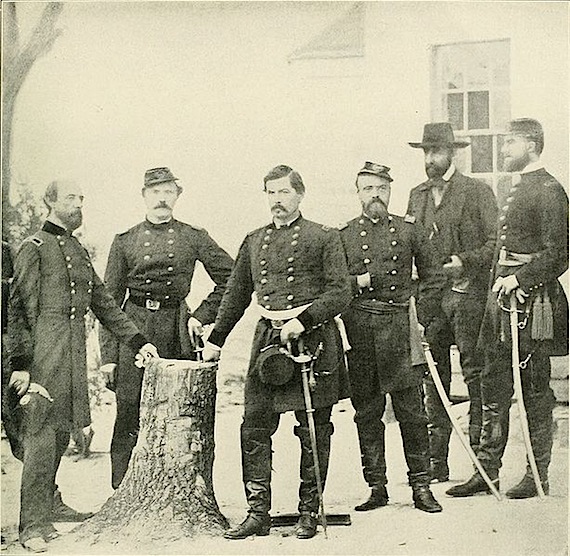
Unfortunately, Lincoln’s leadership was not perfect. He occasionally selected men for public service who were unworthy of his trust. One such individual was General George B. McClellan, commander of the “Army of the Potomac” and, eventually, first general-in-chief of the Union Army.
General McClellan had significant character flaws that I believe serve as warning signs to anyone in leadership. Ultimately, these cost him dearly: He lost Lincoln’s confidence, his job, and a run for the White House (against Lincoln). Worse, they prolonged the Civil War and cost the lives of tens of thousands of soldiers on both sides of the conflict.
Here are the five flaws I jotted down as I read the book:
- Hesitating to take definitive action. McClellan was constantly preparing. According to him, the Army was never quite ready. The troops just needed a little more training. In his procrastination, he refused to engage the enemy, even when he clearly had the advantage. He could just not bring himself to launch an attack. When Lincoln finally relieved him of his duties, he famously said, “If General McClellan does not want to use the army, I would like to borrow it for a time.”
- Complaining about a lack of resources. He constantly complained about the lack of available resources. He didn’t have enough men. His men weren’t paid enough. They didn’t have enough heavy artillery. And on and on he went. The truth is that, as a leader, you never have enough resources. You could always use more of one thing or another. But the successful leaders figure out how to get the job done with the resources they have.
- Refusing to take responsibility. McClellan was constantly blaming everyone else for his mistakes and for his refusal to act. He even blamed the President. Every time he suffered a defeat or a setback, someone or something was to blame. He was a master finger-pointer. Great leaders don’t do this. They are accountable for the results and accept full responsibility for the outcomes.
- Abusing the privileges of leadership. While his troops were struggling in almost unbearable conditions, McClellan lived in near-royal splendor. He spent almost every evening entertaining guests with elaborate dinners and parties. He insisted on the best clothes and accommodations. His lifestyle stood in distinct contrast to General Ulysses S. Grant, his eventual successor, who often traveled with only a toothbrush.
- Engaging in acts of insubordination. McClellan openly and continually criticized the President, his boss. He was passive-aggressive. Even when Lincoln gave him a direct order, he found a way to avoid obeying it. In his arrogance, he always knew better than the President and had a ready excuse to rationalize his lack of follow-through.
President Lincoln had the patience of Job. He gave General McClellan numerous opportunities to correct his behavior and redeem himself. But in the end, McClellan either could not or would not do so. He left the President no choice but to relieve him of his duties.
These same character flaws afflict many leaders today. The best safeguard is self-awareness.
Building Champions has been coaching me since 2002. They have taught me to be more proactive and intentional in both my business and personal life. Visit their Web site to learn more and see their special offer for my blog readers.
Related posts:


In:
Tags: 


Great Post, love history and the lessons we can learn. Character is so important in leadership.
This was so well-written – and extremely relevant to current circumstances. I'm really liking your site!
Thanks for that!
Excellent post. While the five lessons are great food for thought, I’m intrigued by your last paragraph.
A few years ago, I was in a similar situation with an employee. I also allowed numerous opportunities to improve performance. After she became a former-employee, most of the rest of my staff mentioned to me individually that they would not have let it go on so long and they couldn’t believe that I had. There were some relationship ties in a small town that were a factor and I can sleep well at night, but I think I should have had somewhat less Job-like patience with her. Great reminder to me why I need to be spending time reading books like this.
Thanks for a great post!
I have had this exact same experience. I keep wanting to believe that the person will change. I want to be fair. I wonder if I am at fault in my leadership. All of this merely delays the inevitable.
History is a great teacher, and this post is a classic example of that. After reading this I contemplated the question about seeing any flaws in my own leadership. I need to be more action oriented and not waiting for things to be near perfect before I begin a certain task or project.
Thanks for the post Mike!
As a leader, I have learned that my strengths — taken a step too far — become weaknesses. I lead best when I balance my natural tendencies and gifts with the leading of the Spirit and the wise counsel of others on my team.
Enjoyed the article – I don't often come accross posts that point out leadership weaknesses – refreshing.
I tend to focus on the positive ones, too. But the truth is that the negeative ones are more plentiful and for some strange reason (maybe the way our brain is wired?), you can learn just as much, if not more from the negative ones.
This ties in nicely with your recent post on permanent beta-testing. I identify most with the perfectionist aspect. Many times in life, I have sacrificed timeliness in exchange for an added bit of excellence (thinking that those around me would appreciate the attention to detail). I am beginning to see, however, that this approach tends to frustrate everyone involved because, more often than not, people don't really notice the hard-fought "perfection" and I tend to miss windows of opportunity.
While the analysis of McClellan's weakness is correct, none of the exterior factors are present. Much of McClellan's hesitancy was due to him being just plain scared. Lee and Jackson had pounded McClellan during the Penisula Campaign and McC. was in a sense, psychologically defeated even before he engaged them in battle.
However, McC did contribute one good thing: he trained, disciplined and developed the esprit d corps of the Army of the Potomac which survived even worse commanders after McClellan. The strengths the Army had by the time Grant received it had been built on McClellan's incessant drilling, marching and training.
I've been reading the same book since April (my out on that is that I'm Canadian living in the US and never studied US history. A lot of this is new and absolutely engaging. In other words, it's a slow chewy read for me).
I've come to the same conclusion. I've noticed that in my own church that people who do not trust me as the pastor will perhaps hide that in talking to me, but will always let those feelings show with others. It cannot be hidden. You can clearly see that in the personal correspondence that McClellan writes to his wife.
Yes, you can see that in McClennan's correspondence with his wife. His arrogance is also apparent there.
EXCELLENT post! I agree with pp on the point of being patient with an employee. I have noticed that the longer you try to be patient with most of that type, the more that person causes division within the department and stress for the other employees. Not healthy or productive.
I had an executive coach once tell me, “Hire slow; fire fast.” I think there is a lot of wisdom in that statement.”
I love this. McClelland is one of my favorite historical characters, and for the reasons you cited. His flaws are magnificent. Maybe he fashioned himself another Napoleon, the next "great man" of history. He was definitely a narcissist, and of the first order, continually preening himself, wanting his men to adore him as much as he adored himself. And he forfeited a great career. Definitely a lesson for today. Perhaps McClelland was about 150 years or so ahead of his time.
And one of the last comments about "perfection." Perfectionism is a kind of neurosis, or at least it seems so to me. The trick, at least with wordcraft, or any art actually, is knowing when a piece of work is right. For there is only "right" or "not right." The discerning writer craftsman knows the difference. And believe me, fine execution, the attention to detail, is always noticed. Always.
Hi David. Mine was the comment to which you were referring.
I agree with your take that the real trick is discerning between "right" and "not right". Perhaps the use of the word perfection is a bit too strong, because I definitely don't think that even my best work is near perfect. I think that I'll use your choice of words from now on, because, like you, I think that perfectionism is a bit of a neurosis. Thanks for helping me clarify my language.
I love your statement, “His flaws are magnificent.” That's really true, especially when you read them in the context of the book. They stand out in such vivid contrast to the character of both Lincoln and Grant.
Thank you for this post!!! Very helpful in pointing me in the right direction! Thank you!
Michael, the timing of your post is uncanny. I too am reading (listening to) Team of Rivals. Just this morning, on my ride into work, I got through the section about General McClellan up to the point where Lincoln relieved him of his duties. I’m been thinking about the lessons of this portion of the book all morning. Then, at lunch, I read your post–interesting timing! FREAKY!
I have had a few people tell me this. It is freaky, especially since the book has been out for a while.
This is an excellent article. It is important for us to constantly evaluate ourselves to ensure that we do not possess these characteristics.
This doesn't mean that we'll be perfect, but rather, we will be striving to make the right decisions at the right time, and take accountability for the results.
-ASB: http://xeesm.com/AndrewBaker
Providing Competitive Advantage through Effective IT Leadership
The refusal to take responsibility for one's actions has been one of the biggest canards that has plagued the human race since the Garden of Eden. From that point on, the thrust of "I'm a victim" has ruled us. I'm looking forward to the time when we all will realize that Christ demolished our victimhood on the cross and gave us all the power we need to take responsibility for our actions and to "demand" that God work good in the place of evil.
Excellent writing. As for the content: Ouch! May this be used to help the Body of Christ in these difficult times.
I really love your posts on leadership. And there is something almost tangible about looking to events from history that makes this student of leadership pay attention more than the philosophy of leadership de jour.
Thanks. Every time I read a book like this, I think, I must read more history!
Fantastic post Michael! It's funny you're writing about this book, as I'm finally nearing the end! It's been a fantastic read – and everything you said about the Gen. is spot on!
As for me, I know I complain about a lack of resources (mainly time) which leads to me sometimes refusing to take responsibility. But when I sense that coming on, I look at my time usage and make sure I get back on track.
Best, Richard
Good for you! I think this is precisely what it means to be self-aware and to lead yourself.
Thanks for sharing these warning signs! I see all of these in my leadership at times, to one extent or another. Is there any hope for me?
Absolutely. At least you can see the problems and correct them. From what I can tell, McClellan had zero self-awareness. In his arrogance, he was willing to focus on everyone else’s problems rather than his own.
Wow, another challenging post. Thanks Michael. This came at just the right time for me.
-BP
I really enjoyed the book you are referencing in this article. There are a number of blog entries that could have come out of it. Of the qualities you listed in the article, I struggle with complaints around a lack of resources most. In my own mind, I frequently second guess other leaders at my level in the organization with stewardship of their budget and think I could do so much more if I had a piece of their pie also.
I'm trying to take the approach currently that I will receive more resources as I make the most of what I have right now without outwardly complaining.
Love your thoughts on leadership.
On a side note, why wasn't History this intriguing when I was in High School?
Michael, wonderful post. I see most of these qualities in my own life. I've know for a long time that I enjoy planning. I always have, even as a young child. I love to plan but when it comes to execution, see items #1 and #2.
Gratefully, I don't believe I suffer from #3-5. I don't say that out of pride, but more from relief. Still I'm not sure which is worse.
Thanks for this post. Great reminder and wake up call.
Yes, I've worked with people like this and it is difficult to lead them let alone follow them. And maybe this is why some people don't get promoted who think they should.
You should always be the type of follower you would like to lead.
Michael– A very good post! I have found #2 particularly tempting the last year. While the economic situation (both in terms of the culture and the organization) is overwhelming at times, it does not help to focus on this. Thanks for the reminder.
Very relevant post and right on point. This has made me pinpoint exactly the opportunity I am having with someone who works for me. They fit into every one of your indicators. Isn’t it wonderful that Leadership principles remain unchanged after hundreds of years? Thank you for your insight.
Dallas
Great insight! Thanks for your thoughts and words to encourage and humble us. There is a pretty good article in the most recent Christianity Today by Chris Armstrong titled "Let Us Tell You A Story" – Recovering the lost spiritual art of reading biographies. Thanks again!
Anyone who has worked under someone who is a weak leader will give a resounding AMEN to this blog post. The funny thing about weak leaders is that typically everyone else knows they are weak but them.
Great post Michael!
Great to once in a while look at things NOT to do. I read a book once, the Five Dysfunctions of a team, with the same premise of what not to do in team interactions. Very helpful!
Another Michael Hyatt classic! It’s posts like these that have me coming back to your blog again and again. Cheers Mike!
Excellent post and a great lesson on history as well! I especially liked #3 on refusing to taking responsibilty. I would rather hear, "I messed up" or "I am wrong" than an excuse. It seems easier come up with an excuse instead of accepting responsibility and moving forward. Accept responsibility and stand alone!
My recent post Motivating through positive communication
Ouch. Yes. I have a lot of room for improvement.
My recent post A Day in the Life