
Recently, my wife, Gail, and I had dinner with some close, neighborhood friends. As we always do with this group, we soon began discussing the books we were reading. A few minutes into the discussion, Gail asked, “So, how do each of you read a book? What is your practice?”
We then spent the next hour going around the table. Each person shared how they approached reading a book. I was fascinated by the variety and depth of the answers. I picked up several great tips.
When it came time for me to share, I ticked off three or four things I have found helpful. However, now that I have had a few days to think about it, I have come up with several additional items.
When I read a non-fiction book, I typically observe these ten practices:
- Don’t feel that you need to finish. Not to be cynical, but most books aren’t worth finishing. I read until I lose interest. Then I move onto the next book. This is the secret to reading more. I also listen carefully to what my friends recommend. If they suggest a book, I am more likely to like it—and finish it.
- Start with the author bio. Every book flows out of an author’s heart and mind. I want to know something about the person I am going to be spending the next several hours with. Usually, the bio in the book is enough, but often I will Google the author before I start reading.
- Read the table of contents. I learn best when I understand the context. I look at the contents just like I look at a map before I begin a journey. I want to know where we are starting, where we are going, and how we are going to get there. Note to authors: I especially like annotated tables of contents that give me more than just the chapter titles.
- Quickly scan the whole book. I like to do a quick “fly over” to sample the author’s writing. I notice how long the chapters are and how they are structured. I might read a few “pull quotes” or subheads. I note his use of lists, diagrams, and block quotes. I am trying to set my expectations for what is ahead.
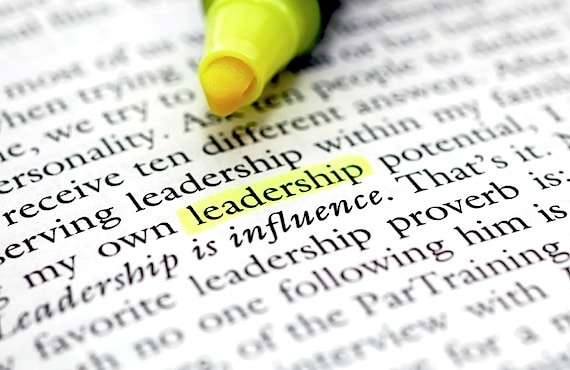
- Highlight important passages. I cannot read a non-fiction book without a highlighter. (On the Kindle, I use the built-in highlighter function). I prefer yellow, though I have been known to use pink in a pinch. I highlight anything that resonates with me in some way. The better the book, the more I highlight. I keep lots of highlighters handy in my desk drawer and briefcase.
- Take notes in the front or the margins. I often take notes in the front of the book, so I have a convenient summary of what I have read. I also like to write in the margins. (My wife, Gail, has a written conversation with the author and fills the margins almost completely!) Interestingly, I rarely go back and re-read these notes. They simply help me think while I am reading.
- Use a set of note-taking symbols. I use the same set of symbols I use when taking notes:
- If an item is particularly important or insightful, I put a star next to it.
- If an item requires further research or resolution, I put a question mark next to it.
- If an item requires an action on my part or follow-up, I put a ballot box (open square) next to it. When the item is completed, I check it off.
- Dog-ear pages you want to re-visit. I bookmark the really, really important passages by folding down the corner of the page. These are usually passages with a quote I want to use in my writing or speaking.
- Review the book and transfer actions to my to-do list. When I have finished with the book, I go back and do a quick scan. As I mentioned above, I don’t pay much attention to my notes—unless they have one of the three key symbols or the page is dog-eared. If there is an action I need to take, I put it on my to-do list with a reference to the book title and the page.
- Share the book’s message. As we say on Thomas Nelson’s BookSneeze.com site, “great books are contagious.” They are meant to be shared. I blog about them, teach them to others, and buy multiple copies to give away to friends and colleagues. This is one way to ensure that the message lives on—and is passed on.
Please note: I don’t read fiction this way. I don’t highlight passages, and I rarely take notes. I read novels purely for pleasure.
What about you? Based on the survey data I have collected, I know that most of my readers are book lovers. As such, I’m sure you employ some disciplines in your reading that would benefit all of us.
Building Champions has been coaching me since 2002. They have taught me to be more proactive and intentional in both my business and personal life. Visit their Web site to learn more and see their special offer for my blog readers.
Related posts:


In:
Tags: 


"Don’t feel that you need to finish"–unless, of course, you're a brb and reading the book for review! ;)
My recent post A Hefty Dose of Hope
We're just in the middle of wrestling with "rapid reading" concepts in my Master of Arts in Global Leadership cohort at Fuller Seminary. One of the references we used in our discussion was a little book called "Reading on the Run" by Bobby Clinton. Michael, it takes your recommendations further and actually suggests six levels of reading, ranging from scanning to studying.
Here's what's neat about this conversation: well-written non-fiction books can be difficult to unpack, but when you scan the book first, and especially when you ask yourself, "what is this author telling us? What is his/her thesis?" it makes a deeper read easier to absorb–because you understand how every paragraph fits into the larger picture.
If anyone is interested in grabbing Clinton's book, you can buy it on Amazon, or you can get a PDF of it here: http://jrclintoninstitute.com/resource-store/book...
It's been incredibly useful to me.
And by the way, I was a lit. major, and I also NEVER rapid read fiction. Different literary form, different set of requirements for reading.
I rarely read non-fiction because in most cases the author spends far too much time inflating what should be a long article into a full length book. Self Help is especially bad about this. What could be very useful gets buried under a lot of drivel. (Sorry, just noticed that Rick Yuzzi said the same thing)
This doesn't seem to be the case with history and some other types of non-fiction, though. So, often I borrow books from friends, use their recommendations, or scan a book before buying it to make sure that it actually has useful or interesting information (bonus if it has both). Once I get it home, I read it straight through. If it fails to interest me, it usually gets shelved with my To Be Read pile with the intention of getting back to it eventually (though it rarely happens, or it happens in increments). If it can't be read straight through, it's not worth reading (in my opinion). If something really strikes me or I want to spend more time on a particular spot, I jot a note down with page number, approximate placement on the page, and usually a portion of the text as an added reminder. Then I stick that paper into the book at that page number (or I keep a post it at the beginning with all the notes together).
That said, I just received In Search of God and Guiness from BookSneeze and I'm loving it! The author has a great style and a genuine interest in his subject. I may be purchasing his book on Churchill after this. I may also be buying a Guinness.
My recent post Mrs. Winterbourne’s Big Fat Greek Wedding
Thank you. Out of respect to the author I feel I need to finish a book but if the author does not captivate me by the end of chapter 1 – I'm done. Sorry, author.
I cannot read a non-fiction book without some kind of writing instrument in my hand. For several years medication & stress significantly hampered my ability to concentrate. So I often use a pencil to mark & annotate a book on my 1st read-through, which is usually fast. And if it didn’t keep my interest, I don’t finish.
There are some authors whose books I ALWAYS read at least twice (Beth Moore, Henry Cloud, John Townsend. At this point I switch to highlighter or pen. If a book contains more than 2 colors, it’s a book that significantly impacted me or expect to weave into my teaching or writing.
I also make notes and use symbols in the margins, but haven’t followed a consistent system. I plan to try your symbols, Michael.
One of the most valuable things I’ve done lately is to create my own index of Scripture references when the publisher hasn’t done so. (Hint! Hint!) Quite often a Scripture will trigger a memory, but not enough detail to find it. If Google, Amazon or Barnes & Noble have not made the book searchable, I can waste a lot of time looking for the reference. (Kindle isn’t in the budget yet.)
Thanks for the tips, Michael. Sounds like it was a great dinner party!
I love how C.S. Lewis starts Chapter 25 of Mere Christianity (Time and Beyond Time):
"It is a very silly idea that in reading a book you must never 'skip'. All sensible people skip freely when they come to a chapter which they find is going to be no use to them. In this chapter I am going to talk about something which may be helpful to some readers, but which may seem to others merely an unnecessary complication. If you are one of the second sort of readers, then I advise you not to bother about this chapter at all but to turn on to the next."
My recent post 3 Ways to Make Yourself Easy to Follow
I read my books almost the same way. Except I don't like to dog-ear books, I feel it ruins them. Yellow highlighter and a pen are a must for non-fiction books I own. I often use my journal too if I really want to remember something. I struggle when I read a library non-fiction book because I cannot make them mine with added words and color. :) I stop if the book bores me and I don't feel guilty. There are too many good books to feel like I have to finish one I'm done with. I sometimes speed read or skim books to get the general idea. Books are the best!!
My recent post Question for You Today
Wow, the effort everyone puts into reading books. I wonder what would happen if a lot of people would read the Bible the same way–it is the only book that I have dug into like Michael suggests. Most of the non-fiction I have recently read has been for my master's degree, has been about writing, or has been about health, exercise, and food. At most, I underline because I'm pretty good at remembering where I read things. I heartily agree with those who have said that non-fiction writers need to be concise–one of things I like most about writing my book through my blog is that it forces me to get to the point quickly. I no longer sound so technical and boring.
My recent post #28 BECOMING A SON OF GOD: THE NEW BIRTH
I am thankful to hear from such a well respected person, "I read until I lose interest. Then I move onto the next book. This is the secret to reading more." Liberation! Nah, seriously, great blog post!
Woops. Smiley above was supposed to be B )
one method I have learned to use is to read chapter one with a hi-lighter. Then read the hi-lights from chapter one then read chapter two. Before reading chapter three, read the hi-lights for chapters one and two. By doing this for several chapters at a time you can read a book several times by the time you get finished.
I highlight as well but then after I'm done reading the book I go through it again and record any quotes that significantly impacted me into my tumblr. The main reason for this is so I can recall that quote using search when I remember something I read related to what I'm speaking on or writing about BUT can't remember where I read it.
Also, going through the book a second time to pull out the highlighted quotes really helps to solidify the things I learned from the book.
When I like a book I find myself on Google to see what kind of life the person lived. I can't get myself to Dog-ear the pages. That would be like throwing my children in the mud ;)
I am glad I have permission to stop reading boring books. I always feel so guilty for doing so.
My recent post Is Intense Debate Worth It?
This is one of the best post I have read in your blog, Mike! In addition to what you have mentioned, I find the practice of random reading of chapters particularly helpful: when I am in the mood to read a particular chapter in a book, say, Chapter 6, I would rather jump straight to read that particular chapter that interests me, rather than going through chapter by chapter from 1,2,3,…. 'cause by the time I reach Chapter 4, I could have lost my willpower to read Chapter 6 especially if the first few chapters are lengthy and draggy!
I almost always finish a book that I start. The exceptions are usually works of fiction when the language or violence or sensuality "cross the line". I laughed reading you post because I do some of the same things — write in the margins (an ongoing conversation, like your wife, if I disagree with the author), notes on the back pages for things that I might want to look at again, arrows in the margin pointing to underlined sentences, quotes typed into my iPhone notes that I want to use in my e-mail signature, dog-eared pages when I want to quickly find something again.
A college textbook that I've kept now for 35+ years and reread a couple of time is How to Read a Book by Mortimer & Doren Adler. Seems silly to read a book about reading books but it's an excellent guide to reading thoughtfully and critically.
My recent post Is Running a 'Waste of Time'?
Totally with you here, I tend to “study” a non-fiction book. I underline, or highlight and I take notes. I often stop reading even if I’m not done and the parts I like I tend to go back and read again. I have read many books like this more than once.
Michael, I'm currently reading a book on Nonverbal Learning Disorders because my daughter has Asperger Syndrome. There is so much in this book that is helpful to me and I can't get my mind to focus on any one section or chapter. I tend to go back and forth, here and there, whatever catches my fancy at the moment. As haphazard as this may sound, it really works for me. Melissa Knauer
Simply beautiful. If we can only stay open to such experiences God will place them in our life just when we need it. We need to be willing though to see it with our spirit, like you did, are we miss the gift.
Michael, I posted this comment to another article your had written and I thought it didn't go through because it popped up again. So I am sorry the same comment got posted to this send article and it is not applicable to the article here.
Just wanted you to know so you can delete this one.
My recent post Tea Party Convention in Nashville Truth