





Most people won’t change course until something traumatic happens that gets their attention. Maybe it's the loss of a job or a marriage. Sometimes it's a health crisis. It happened to me.
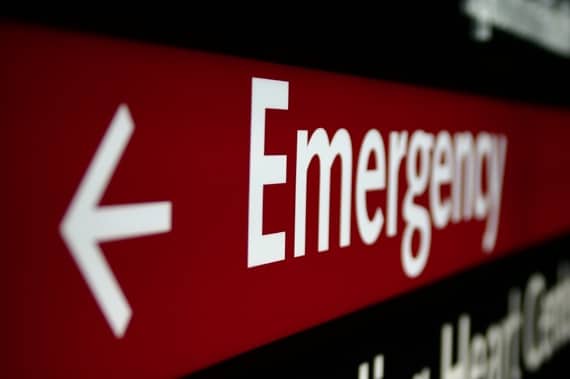
Several years ago, I was in New York City on business. I was having a relaxing dinner with one of my colleagues. Suddenly, as we were finishing our meal, I started to have chest pains.
Initially, I tried to ignore them. But then I began quietly to panic. I felt that the room was closing in on me. I sat there for probably five to ten minutes, debating what I should do next.
Finally, I overcame my embarrassment and blurted out, “I think I may be having a heart attack!”
My friend immediately took control. He paid our bill, hailed a cab, and got me to St. Vincent’s Hospital, which happened to be the one closest to our restaurant.
After some preliminary tests, the doctor said, “All of your vitals look fine. You are not having heart problems. But, just to be safe, we’d like to keep you overnight.”
Then they strapped me to a biometric bed and let me rest. Needless to say, I didn’t sleep much.
The next morning, the doctor came in and said, “I’m not sure what happened last night, but your heart seems fine. I suggest that you go to your primary care physician when you get back to Nashville and follow-up on this.”
My regular doctor didn’t find any problems either. Nevertheless, I ended up in the hospital twice more over the next year, thinking each time that I was having a heart attack. No one could find anything. I even saw a counselor, wondering if perhaps I was experiencing stressed-induced panic attacks.
Finally, in desperation—and thinking I might be going crazy—I made an appointment with a renowned cardiologist here in Nashville. He had saved the life of one of our authors, who raved about him.
The cardiologist ran me through a battery of tests and then called me back into his office. “Mike, your heart is fine. In fact, it is in great shape. Your problem is two-fold: acid reflux, probably as a result of a small hiatal hernia, and stress.”
He continued, “about 30% of my patients who think they are having heart problems have an acid reflux problem. The symptoms are very similar. Fortunately, it is easy to treat.”
He then warned, “Stress is also something you need to address, primarily through rest and exercise. If you don't make this a priority, you could be back in here with a real heart problem.”
That got my attention. It was a great reminder that I needed to be more intentional about the health account in my life plan.
Because of the demands of work, I had let it slide. I wasn't working out regularly, resting as much as I should, or eating very well. But suddenly, I was motivated!
The good news is that you don't have to wait for a health crisis—or any other crisis—to motivate you to live your life more intentionally. Instead, why not avoid the crisis (to the extent you can) and plan ahead? This is what life planning is all about.
Here are a couple of questions to get you focused?
- If you suddenly had a heart attack, what would you wish you had done to avoid it?
- If your spouse suddenly announced that he or she wanted a divorce, what would you wish you had done to avoid it?
- If you suddenly discovered your child was on drugs, what would you wish you had done to avoid it?
- If your boss announced that you were being terminated, what would you wish you had done to avoid it?
Most of us intuitively know the answer to these questions. Crises don't usually happen suddenly. Instead, they are the result of hundreds of choices we make daily that eventually culminate in a crisis.
The key is to see trouble coming and avoid it (see Proverbs 22:3). A life plan is one tool for doing so. It won't make you bullet proof, but it will help you avoid a lot of self-inflicted pain.
Disclosure of Material Connection: Some of the links in the post above are “affiliate links.” This means if you click on the link and purchase the item, we will receive an affiliate commission. Regardless, we only recommend products or services we use and believe will add value to our readers. We are disclosing this in accordance with the Federal Trade Commission’s 16 CFR, Part 255: “Guides Concerning the Use of Endorsements and Testimonials in Advertising.